
Direct answer
Record the intact pallet and labels before cutting the wrap. Open one carton at a time, reconcile its phones against the agreed list, and keep weight differences separate from confirmed shortages. Preserve safe contents and packaging, then report specific exceptions under the seller’s and booked carrier’s terms.
A torn stretch wrap, a lighter carton and a missing handset are three different observations. Record each separately. None, by itself, establishes when a loss occurred or who is responsible.
This procedure covers physical receipt and reconciliation of palletized phone stock. It ends at a documented release or hold decision; functional diagnostics and resale grading come later. Before dispatch, agree the model, storage, quantity and included accessories using the wholesale phone lot checklist.
Prepare one receiving file before the truck arrives
Name a receiving lead and a person responsible for seller and carrier notifications. Put the purchase order, final packing list, shipment reference and booked transport service in one file. Record the list’s revision or issue date: counting against an earlier sales offer can create a false shortage.
Agree where exceptions will be held and how records will be shared securely. Full handset identifiers and shipping labels belong in the restricted receiving file, not public videos. Confirm the applicable notification and claim process before arrival; a warehouse checklist does not replace the contract or carrier terms.
Inspect the pallet before cutting the wrap
Photograph the pallet from each accessible side, its transport label, straps, stretch wrap and any numbered seals. Include a wider view locating a damaged area and a close view showing it. Record the observed pallet and carton count on arrival, keeping it distinct from a later handset count.
Describe what is visible: “wrap split at lower corner,” “carton crushed,” or “seal number differs from packing record.” Avoid writing “stolen” when the evidence only shows disturbed packaging. Preserve the original delivery record and any exception acknowledgment. An unchecked interior is not a verified complete unit count.
If unloading conditions prevent a full check, record that limitation and the time the detailed inspection starts. Do not invent a completed dock inspection after the vehicle has left.
Compare carton gross weights on the same basis
A weight comparison is useful only when both figures describe the same thing. Confirm whether the dispatch figure includes the carton, inserts and accessories, or refers to a whole pallet. Record units, scale identification, displayed reading and the scale’s verification status available to the receiving team.
Weigh the unopened carton where practical, photographing its label with the reading. Do not compare a loaded pallet against a sum that excludes the pallet and wrapping. Differences in packing materials or accessory allocation may also require reconciliation.
A discrepancy triggers a recount and document check; it does not prove how many phones are missing. Agree any weight tolerance for the specific packing configuration instead of applying an invented percentage to every shipment.
Use a recorded opening sequence that keeps each carton identifiable
The following is a suggested evidence arrangement, not an industry requirement for two cameras:
- Keep a wide view of the working surface, unopened carton and the opening sequence.
- If equipment and space permit, use a second view for labels, seals and count details that the wide view cannot resolve.
- Show the carton identifier before opening. Keep that carton’s contents together until its tally is complete.
- Record pauses, camera failures or items moved out of view. Retain original files; use labeled copies for annotations.
Match device clocks and note the time zone before recording. Where only one camera is available, prioritize readable identifiers and an orderly sequence. More footage cannot compensate for an unreadable label, a missing packing list or undocumented mixing of cartons. Neither one nor two camera views guarantees that a claim will be accepted.
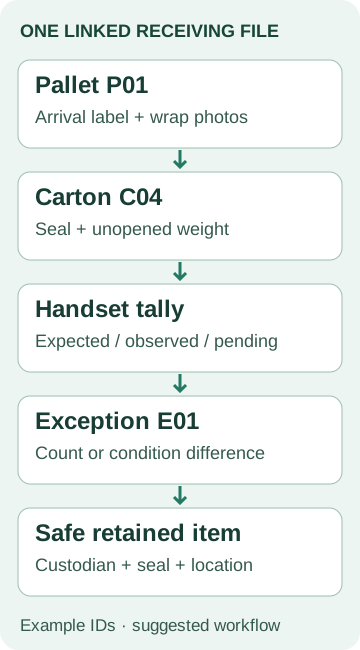
Reconcile cartons first, then handset units
Use a separate row for each carton and a linked unit list when serial numbers or IMEIs are supplied. Do not treat a carton label as proof that its contents match. If an identifier is inaccessible until a later safe diagnostic check, mark it pending rather than copying an assumed value.
| Receiving field | What to record |
|---|---|
| Shipment and pallet | Transport reference and the pallet’s observed identifier |
| Carton | Supplier carton ID, or a clearly marked receiving ID if absent |
| Expected contents | Packing-list revision, model/storage and expected quantity |
| Observed contents | Physical quantity, visible model information and included accessories |
| Unit identity | Observed label identifier, duplicate flags, or “pending verification” |
| Exception | Quantity difference, mixed model, damage or identity mismatch, each separately |
| Evidence and disposition | Photo/video filenames, recount result, hold location and responsible person |
Keep an unopened carton, empty packaging and already counted units in distinct working areas. Ask another person to recount an apparent shortage where staffing permits. Check whether the missing quantity appears in another carton, a split shipment or a revised list before reporting a confirmed total.
Release only the reconciled stock into the next inspection stage. Keep unresolved cartons or units identifiable; do not silently adjust the expected count to make the inventory balance.
Retain safe samples without losing the original condition
For a disputed handset or packing component that is safe to retain, assign an exception ID and photograph its condition before applying a new receiving seal. Record the original seal separately from the seal your team adds. A new seal documents your subsequent custody; it does not recreate the shipment’s original seal.
Log the item or packaging retained, carton link, new seal ID, storage location, date/time and custodian. Each later opening or transfer should record who handled it, why, and the replacement seal if one is applied. Keep original packaging and records available for inspection; FedEx Freight specifically instructs claimants to retain original packaging until the claim is resolved.
Do not preserve evidence by continuing unsafe handling. PHMSA identifies damaged, defective or recalled lithium batteries as more susceptible to short circuit, heat release and fire. If battery damage is suspected, stop routine processing and follow the site’s battery and emergency procedures. Do not place an unsafe phone into an ordinary sealed sample package simply to complete this checklist. PHMSA’s battery overview explains that risk.
Send a discrepancy packet for the actual service booked
Send observable facts, the affected references and the requested next step. Keep the seller notification, carrier notification and formal claim as distinct records, with dates, recipients and acknowledgment references.
| Source and scope | Evidence or process to check |
|---|---|
| FedEx Freight claims | Its supporting-document examples include invoices, packing slips and damage photos. Check any inspection request and retain the original packaging. |
| UPS US package claims | Requested photos can include the item as packed, the shipping label and the outside package/damage; package dimensions may also be requested. This is package guidance, not a universal pallet-freight rule. |
| UPS Air Cargo | Its process distinguishes written complaint periods for damage, delay and non-delivery and refers to air waybill conditions. Check the relevant event and terms rather than borrowing a package-service deadline. |
Attach the agreed list, arrival record, carton/unit reconciliation, relevant originals and the value documentation requested by the responsible party. Ask who will file the claim, what inspection or further evidence is needed, and which deadlines apply. Do not wait for a complete video edit before checking an urgent notification requirement.
Evidence helps explain a discrepancy. Entitlement, liability and payment remain subject to the applicable agreement, service terms and assessment. Keep the hold open until reconciliation or an authorized disposition is recorded; obtain instructions before repair, wiping, disposal or return, subject to immediate safety needs.
Sources
- FedEx Freight claims and supporting documents — FedEx Freight Accessed October 7, 2026.
- UPS US package claims and requested photographs — UPS Accessed October 7, 2026.
- UPS Air Cargo claims and missing pieces process — UPS Air Cargo Accessed October 7, 2026.
- Lithium battery safety overview — PHMSA Accessed October 7, 2026.